


Off-Grid Solar vs. Grid Power in the San Luis Valley: Which Is Best for Rural Land in Alamosa, Costilla, Conejos, and Rio Grande Counties?
Thinking about buying rural land in the San Luis Valley? One of the most important decisions you'll face is whether to connect to utility power or build an off-grid solar system. Depending on the property's distance from existing power lines, one option can save you tens of thousands of dollars.
For buyers considering land in Alamosa County, Costilla County, Conejos County, or Rio Grande County, understanding the true costs of off-grid living is a critical part of due diligence.
In this guide, we'll compare off-grid solar vs. grid power in the San Luis Valley, helping you determine which solution makes the most financial sense for your future rural home.
Why Off-Grid Living Is Popular in the San Luis Valley
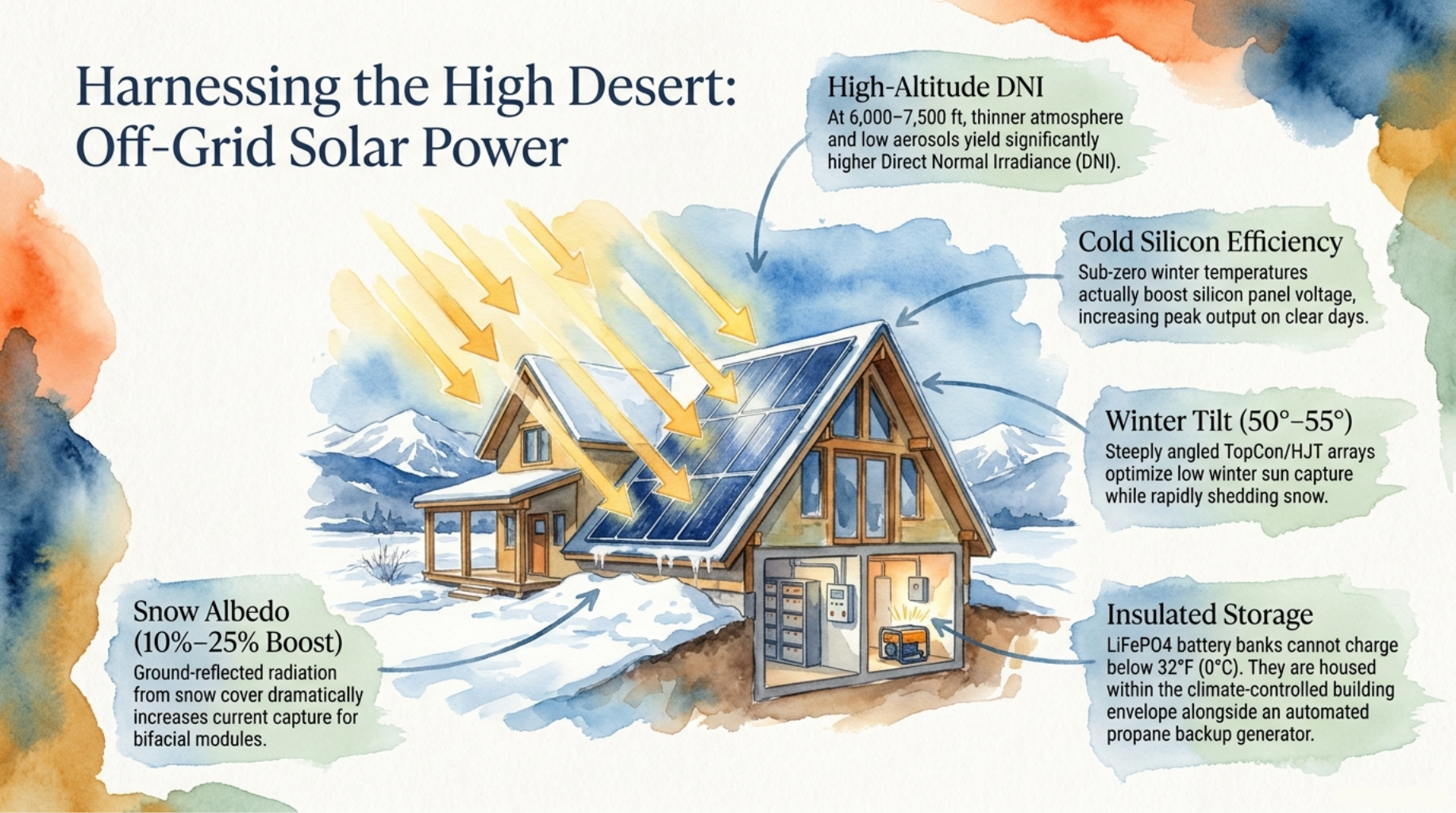
The San Luis Valley, Colorado, is one of the best regions in North America for solar energy production. The Valley benefits from:
-
More than 300 sunny days per year
-
High elevations between 6,000 and 7,500+ feet
-
Excellent solar exposure year-round
-
Low humidity and minimal cloud cover
-
Strong solar performance even during winter months
Because many rural properties are located far from existing utility infrastructure, buyers often find that installing solar power is more affordable than extending electrical service.
What Is an Off-Grid Solar System?
An off-grid system allows a home to operate independently from the electrical grid. Most systems include:
-
Solar panels
-
Lithium battery storage
-
Hybrid inverter
-
Backup propane generator
-
Monitoring and control equipment
Many off-grid homes throughout Alamosa, Costilla, Conejos, and Rio Grande Counties successfully operate year-round using this setup.
 Benefits of Off-Grid Solar in the San Luis Valley
Avoid Expensive Power Line Extension Costs
One of the biggest advantages of going off-grid is avoiding utility extension fees.
Typical power line extension costs can range from:
-
$15,000 to $30,000 per mile for overhead lines
-
$25,000 to $50,000+ per mile for underground service
-
Additional engineering and transformer fees
For remote parcels, these costs can quickly exceed the price of an entire solar power system.
Best For:
-
Remote mountain properties
-
Large ranch parcels
-
Recreational land
-
Off-grid cabins
-
Desert and agricultural properties
Eliminate Monthly Electric Bills
When your home generates its own electricity, you avoid:
-
Monthly base service fees
-
Utility rate increases
-
Power cost adjustments
While off-grid systems still have maintenance costs, many homeowners appreciate predictable long-term expenses.
Exceptional Solar Production in Southern Colorado
The San Luis Valley averages approximately 5.5 to 6.0 peak sun hours daily, making it one of Colorado's strongest solar markets.
Additional benefits include:
-
Increased panel efficiency in cold weather
-
Enhanced winter production from snow reflection
-
High annual energy output
Increase Property Value Through Infrastructure Ownership
Many buyers don't realize that utility extension fees generally pay for infrastructure owned by the utility company.
By contrast, an off-grid solar system becomes part of your property's improvements and can add value to the overall investment.
Potential Financing Options
Colorado offers programs that may help finance solar and battery installations, making renewable energy more accessible for rural property owners.
Challenges of Off-Grid Solar Living
Higher Initial Installation Costs
Typical installation costs include:
Small Cabin
$8,000 - $18,000
Energy-Efficient Home
$25,000 - $50,000
Large All-Electric Home
$50,000 - $90,000+
The initial investment can be substantial but may still cost less than a long-distance utility extension.
Winter Energy Planning Is Critical
The San Luis Valley experiences significant winter temperature swings and shorter daylight hours.
Solar systems must be designed for December and January conditions, when production is lowest.
This often requires:
-
Larger battery banks
-
Additional panel capacity
-
Steeper panel installation angles
Battery Storage Requirements
Modern lithium batteries perform well but require temperature management during extreme winter conditions.
Most installations include:
-
Insulated battery rooms
-
Climate-controlled utility spaces
-
Battery heating systems
Generator Maintenance
Most professionally designed off-grid systems include a propane backup generator.
This provides reliable power during:
-
Multi-day winter storms
-
Heavy snow events
-
Extended cloudy periods
Homeowners should budget for routine maintenance and fuel expenses.
 Benefits of Grid Power in the San Luis Valley
Lower Cost When Power Is Nearby
If utility service already borders your property, connecting to the grid is usually the least expensive option.
Typical connection costs range from:
-
$1,500 to $5,000
For many buyers, this may be more affordable than installing batteries and backup systems.
Unlimited Power Availability
Grid-connected homes offer convenience because there is no need to:
-
Monitor battery storage
-
Manage energy consumption
-
Operate backup generators
This is often the preferred solution for full-time residences with higher electrical demands.
Ability to Add Solar Later
Homeowners can install grid-tied solar systems and take advantage of net metering opportunities while still maintaining utility service.
This approach offers the best of both worlds for many homeowners.
Drawbacks of Utility Power for Rural Land
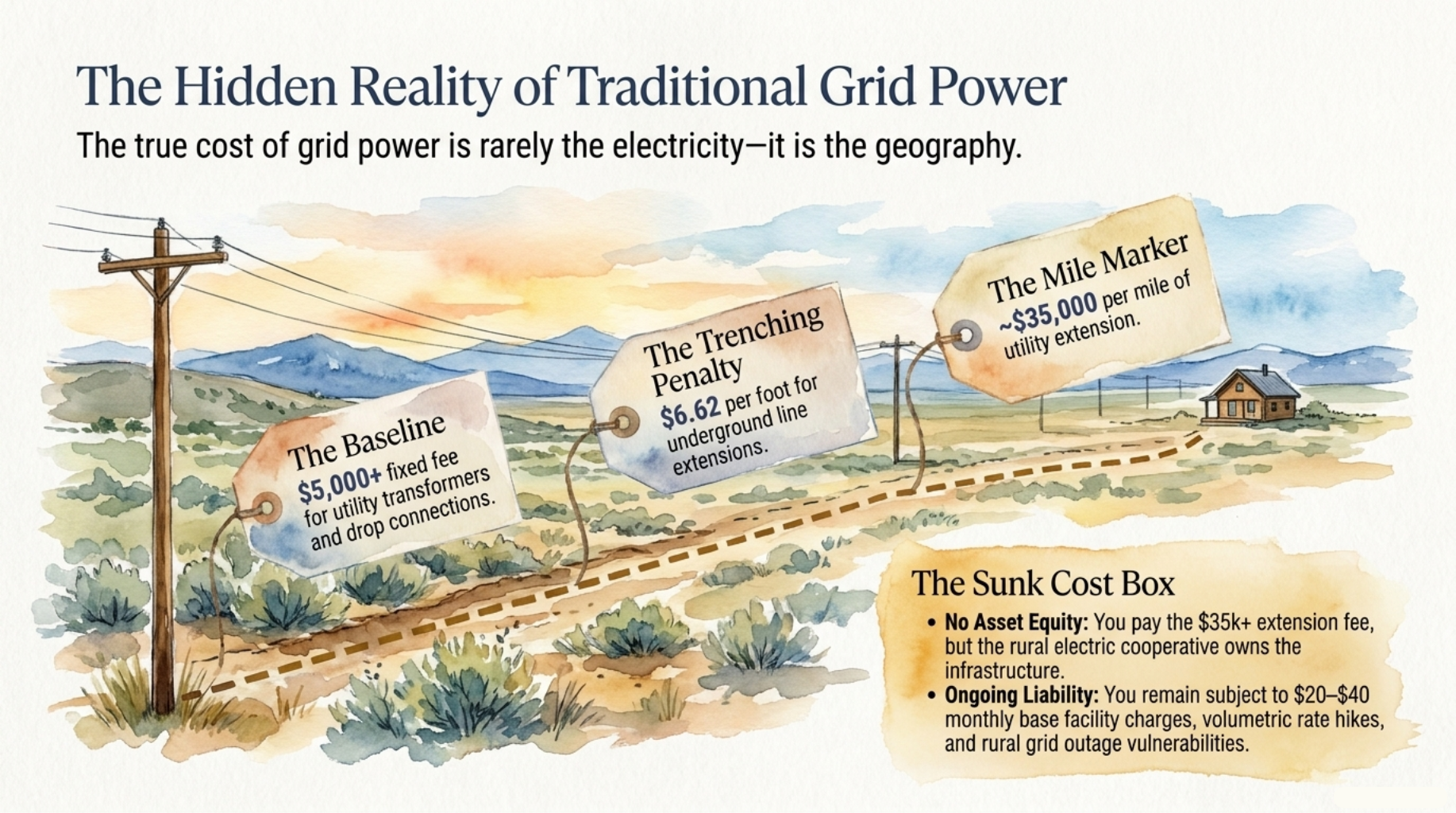
Utility Extensions Can Be Extremely Expensive
For remote parcels, utility extension costs can exceed:
$35,000 to $55,000+ Per Mile
This is often the factor that causes buyers to seriously consider off-grid solar as an alternative.
Ongoing Monthly Utility Bills
Grid power comes with recurring costs such as:
-
Service fees
-
Energy charges
-
Future rate increases
Unlike a solar system, these payments never end.
Potential Power Outages
Rural power lines can be affected by:
-
High winds
-
Snowstorms
-
Equipment failures
Many homeowners choose backup generators or battery systems to improve reliability.
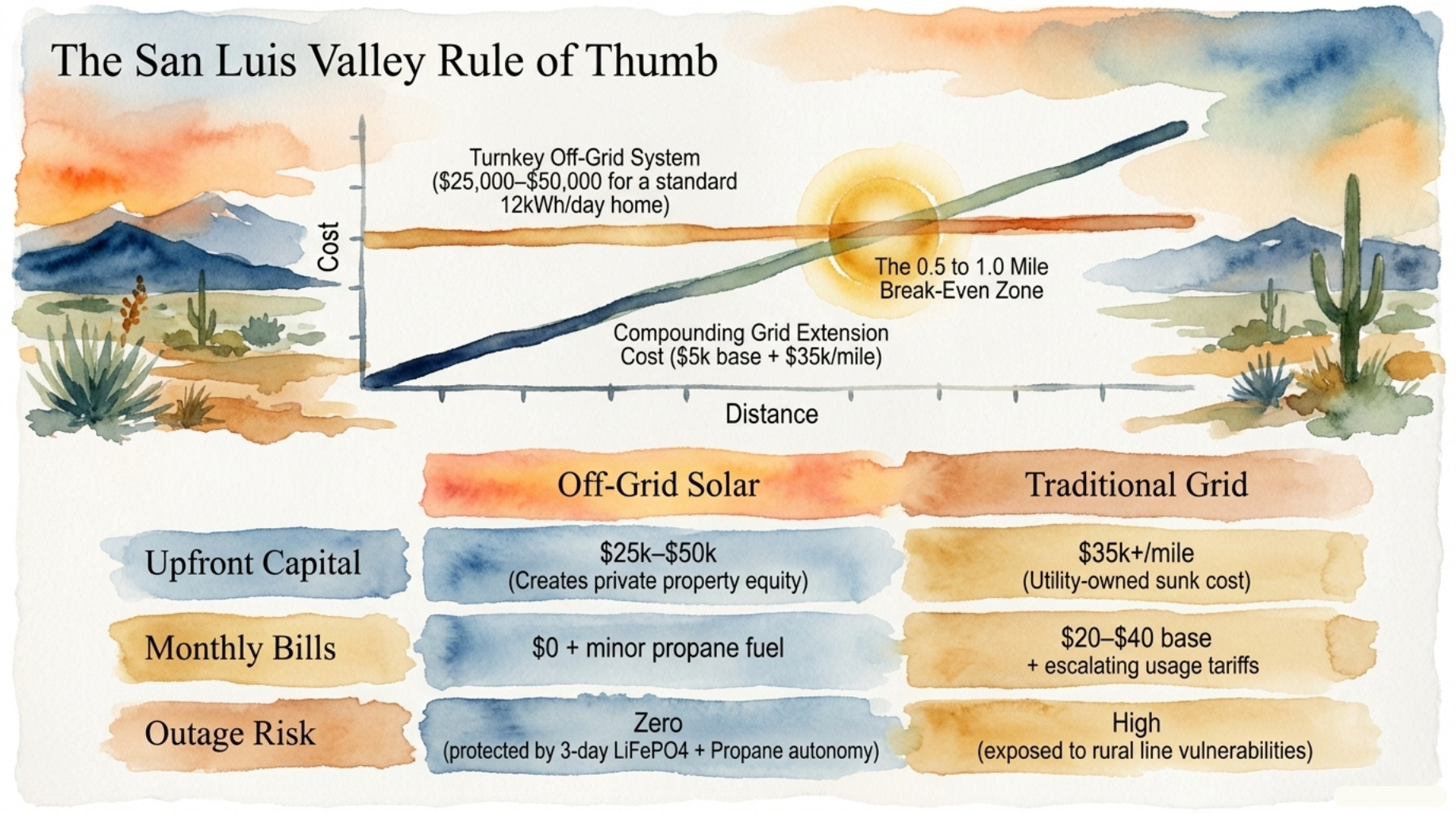
The ½ Mile Rule: A Helpful Guideline for San Luis Valley Land Buyers
When evaluating a rural property, many buyers use a simple rule of thumb:
Property Less Than ½ Mile from Power
Grid connection is often the most economical choice.
Property More Than ½ to 1 Mile from Power
An off-grid solar system frequently becomes the better financial investment.
Instead of spending money on utility-owned infrastructure, you can invest directly in your property's energy system.
 Off-Grid Solar vs. Grid Power: Quick Comparison
Off-Grid Solar
✅ No monthly electric bills
✅ Energy independence
✅ No utility extension fees
✅ Greater resilience during outages
✅ Infrastructure owned by the property owner
❌ Higher upfront costs
❌ Battery maintenance requirements
❌ Generator fuel and maintenance
❌ Requires thoughtful energy planning
Grid Power
✅ Lower cost when power is nearby
✅ Easy operation
✅ Unlimited electrical usage
✅ Compatible with grid-tied solar
❌ Monthly utility bills
❌ Rate increases over time
❌ Potential outage risk
❌ Costly line extensions for remote land
Frequently Asked Questions About Off-Grid Living in the San Luis Valley
Is off-grid living legal in Colorado?
Yes. Off-grid homes are legal in Colorado when they comply with applicable county building codes, septic regulations, and permitting requirements.
How much does it cost to install solar on rural land?
Most residential systems range from approximately $25,000 to $50,000, while larger systems may exceed $90,000 depending on energy usage and battery capacity.
Is solar power reliable during San Luis Valley winters?
Yes, when properly designed. Winter-specific sizing, battery storage, and backup generators help maintain dependable year-round operation.
Should I buy land without power?
Many buyers successfully purchase off-grid land throughout the San Luis Valley. The key is understanding the total cost of utilities before closing and ensuring the property supports your long-term plans.
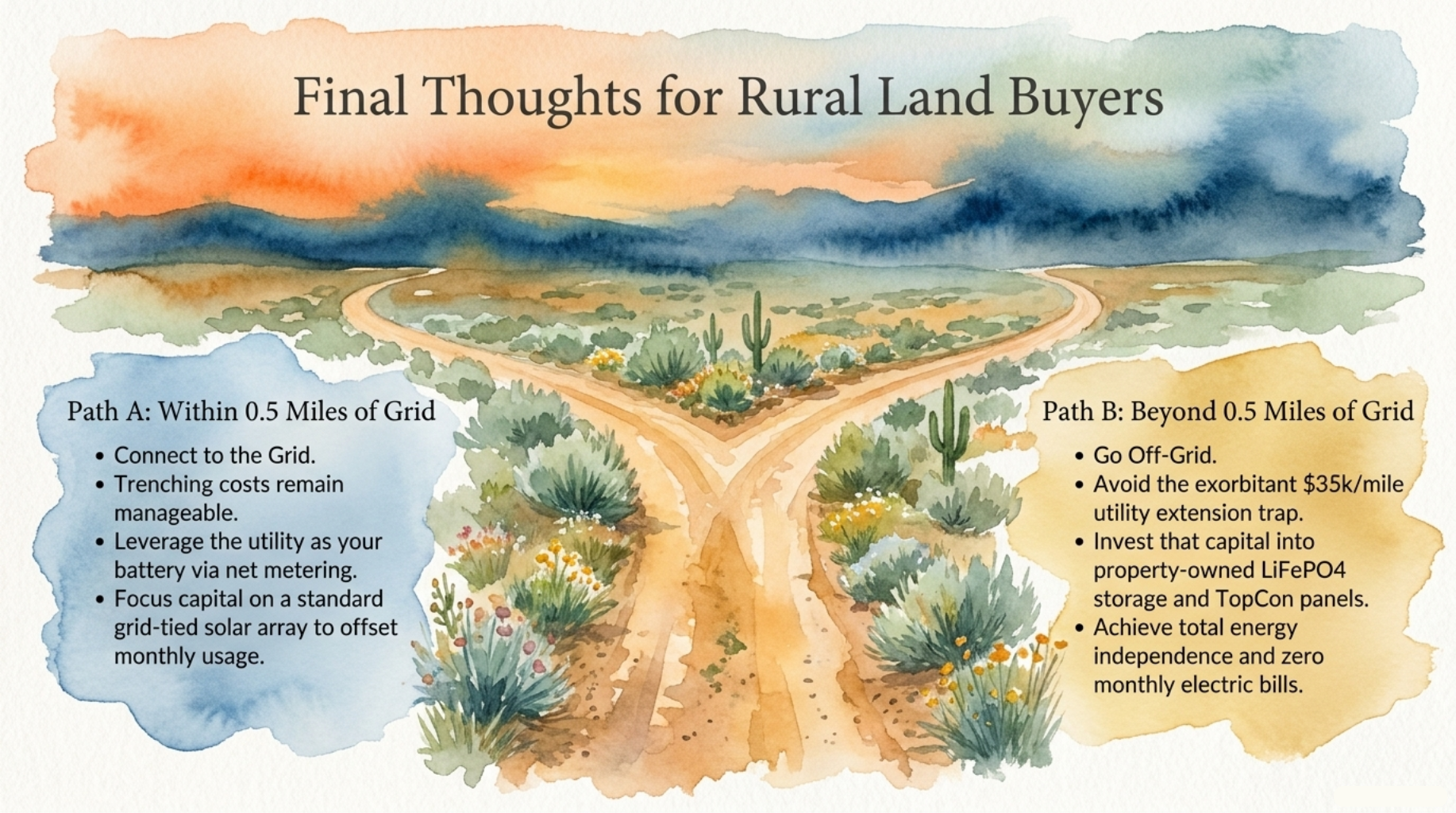 Final Thoughts
Whether you're searching for off-grid land in Costilla County, a rural home site in Alamosa County, acreage in Conejos County, or a property near Monte Vista in Rio Grande County, understanding your power options can save thousands of dollars.
For properties located close to existing utilities, grid power is often the most economical solution. For remote parcels, off-grid solar frequently delivers greater long-term value while increasing energy independence and building equity in the property.
Before purchasing any rural land, always investigate utility availability, extension costs, solar potential, well requirements, access, and county regulations to make an informed decision.
This article is for educational purposes only and should not be considered engineering, tax, legal, or utility planning advice. Buyers should consult qualified solar installers, utility providers, and licensed professionals when evaluating specific properties.