

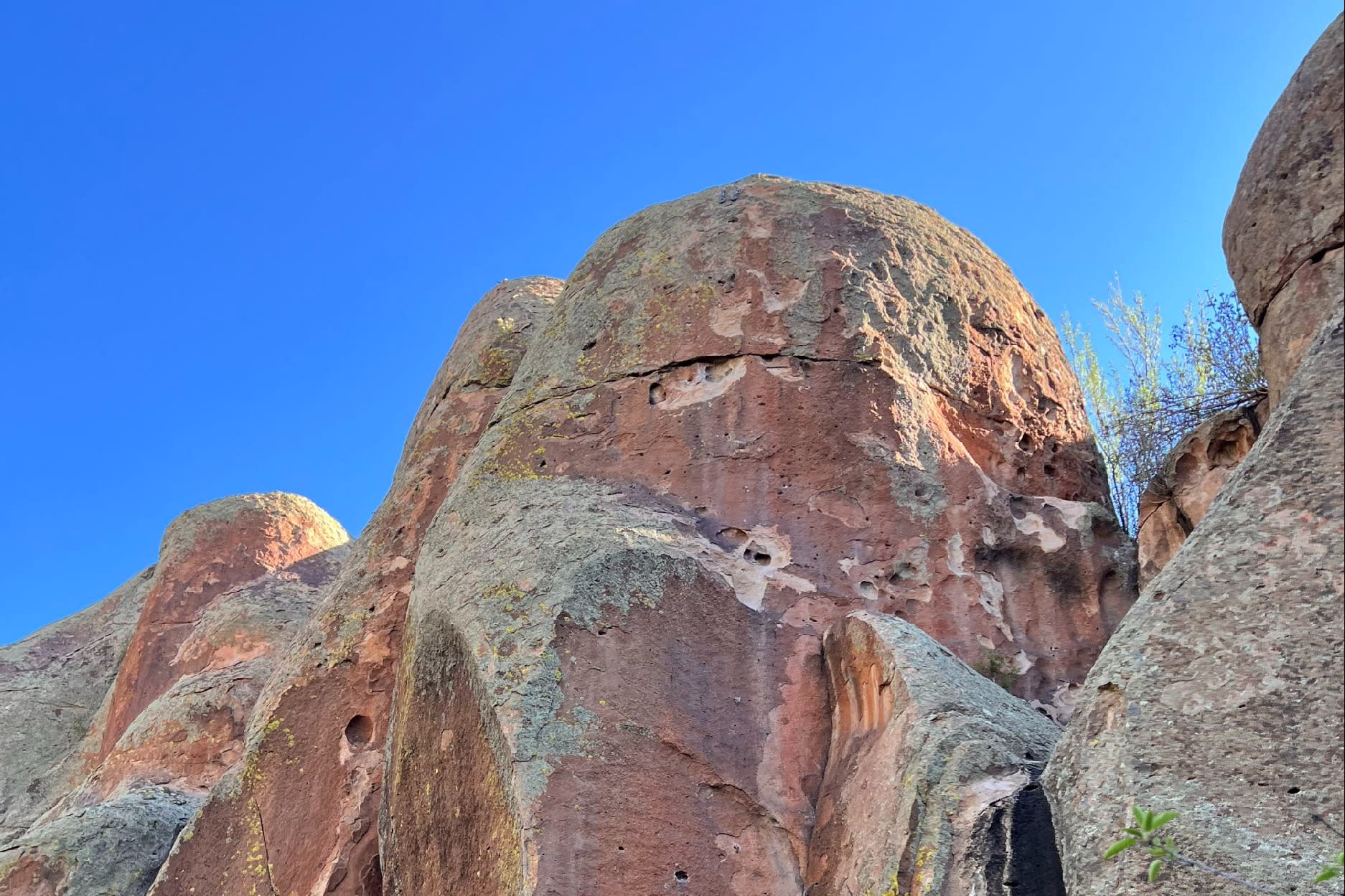

Penitente Canyon: Where Volcanic Stone, Living History, and High‑Desert Adventure Converge
Tucked into the western edge of Colorado’s San Luis Valley, Penitente Canyon is more than a recreation area—it is a place where geology, culture, and adventure intersect in a way few landscapes can match. Known worldwide for its bullet‑hard volcanic rock and exceptional sport climbing, the canyon also preserves centuries of human history and a growing trail network that attracts mountain bikers, hikers, and equestrians alike.
Whether you’re visiting for a single afternoon or building a multi‑day itinerary around the region, Penitente Canyon offers an authentic high‑desert experience that rewards preparation, curiosity, and respect for the land.
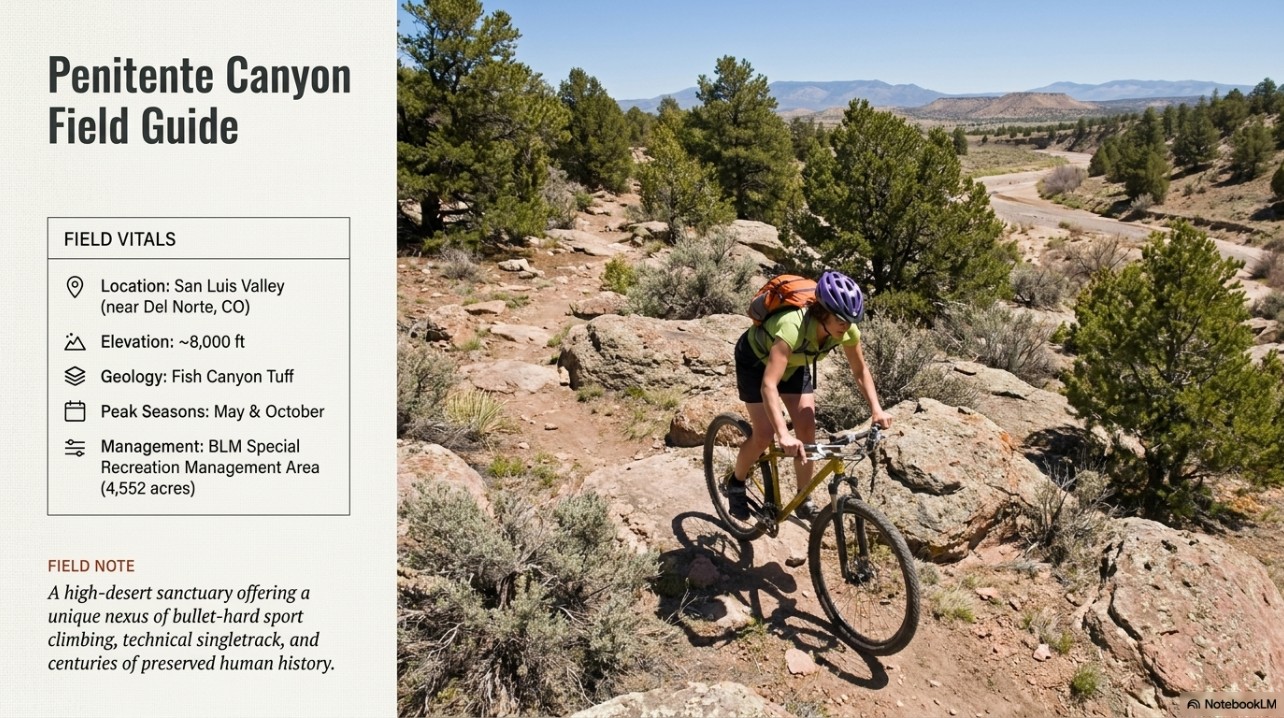
Penitente Canyon Field Guide — The Big Picture
Penitente Canyon is located near Del Norte, Colorado, within the heart of the San Luis Valley, sitting at approximately 8,000 feet in elevation. Managed by the Bureau of Land Management (BLM) as a Special Recreation Management Area, the canyon encompasses roughly 4,500 acres of protected public land.
What makes the area immediately distinctive is its Fish Canyon Tuff geology—a welded volcanic rock formed by massive eruptions nearly 28 million years ago. This rock type creates steep fins, sculpted walls, and high‑friction surfaces that define the canyon’s terrain.
From a visitor standpoint, Penitente Canyon functions as:
- A world‑class sport climbing destination
- A high‑desert trail system with technical singletrack
- A cultural landscape shaped by Indigenous peoples, Spanish exploration, and later religious communities
BLM‑managed onsite camping allows visitors to stay close to the action, though conditions are primitive and best suited for self‑sufficient travelers.
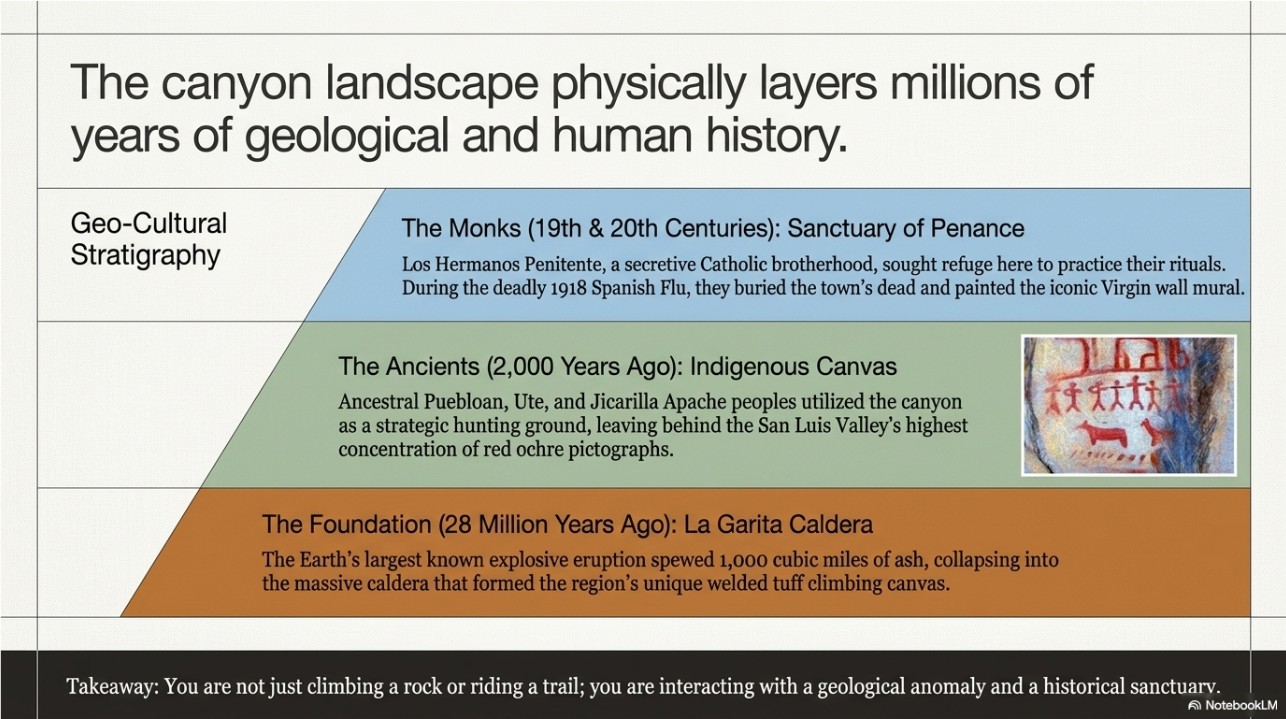 A Landscape Shaped by Culture and Belief
Long before modern recreation, Penitente Canyon was part of a much older human story. Native American presence in the region is marked by pictographs and archaeological sites, reminders that the canyon served as both a travel corridor and a place of meaning.
During the early 1800s, Spanish traders moved through the area along what would become the Old Spanish Trail, leaving behind wagon ruts that are still visible today. Later, the canyon became associated with the Penitente Brotherhood, a Catholic lay order known for its devotional practices in remote areas of the Southwest. The canyon’s name is a direct reflection of this legacy.
This layering of belief, travel, and survival adds a depth to Penitente Canyon that extends far beyond recreation.
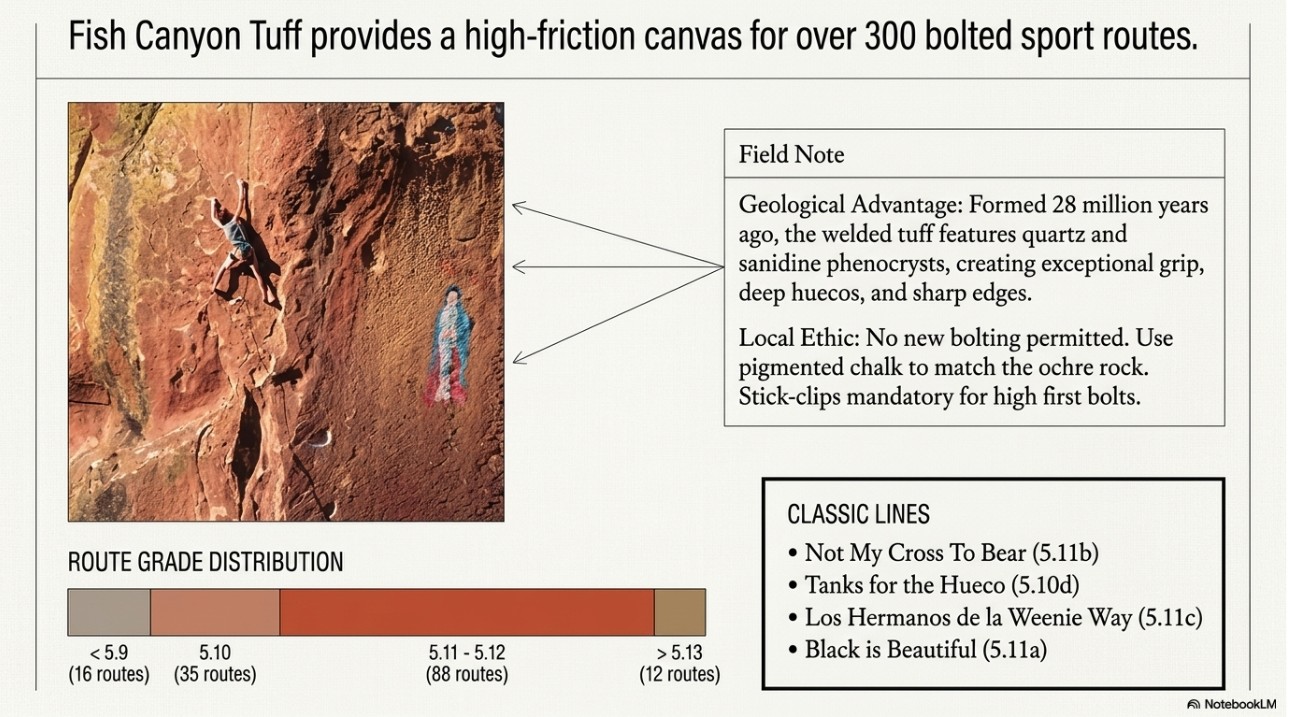 World‑Class Sport Climbing on Fish Canyon Tuff
Penitente Canyon is internationally recognized for its sport climbing, offering 300+ bolted routes across a wide range of grades. The welded tuff provides exceptional grip, with quartz and sanidine crystals creating natural texture that climbers value for precision movement.
What Climbers Can Expect:
- Steep faces with deep huecos, edges, and technical sequences
- A strong emphasis on technical footwork rather than brute strength
- Routes that reward efficiency and balance
Local Climbing Ethic:
- No new bolting permitted
- Pigmented chalk encouraged to match the ochre rock
- Stick‑clipping required on routes with high first bolts
Classic lines such as Not My Cross To Bear, Tanks for the Hueco, and Black Is Beautiful have helped cement Penitente’s reputation as both accessible and demanding—ideal for climbers looking to refine technique at elevation.
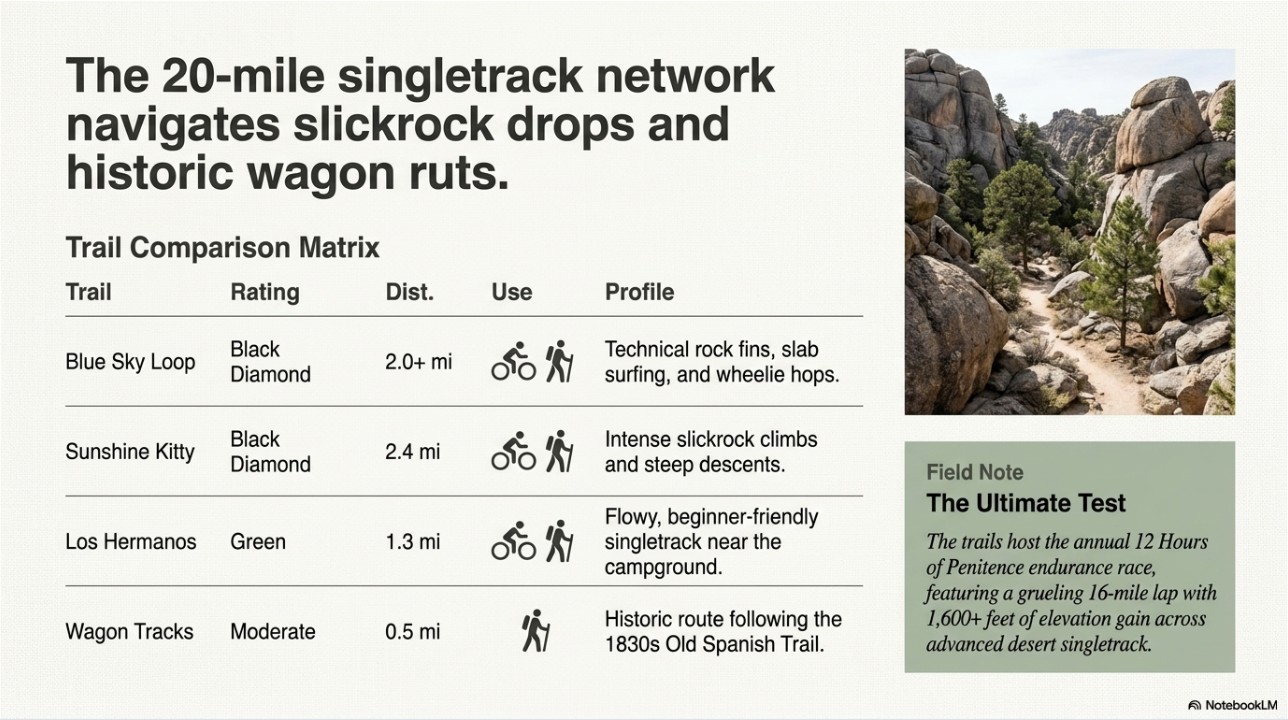 A 20‑Mile Singletrack Network Through Stone and Time
Beyond climbing, Penitente Canyon has quietly become a standout destination for technical singletrack riding and hiking. The trail system winds through slickrock slabs, narrow fins, and historic corridors once traveled by wagons and traders.
Notable Trails:
- Blue Sky Loop – A black‑diamond route featuring rock fins, slab riding, and short technical moves that demand precision
- Sunshine Kitty – Steep slickrock climbs and fast descents for advanced riders
- Los Hermanos – A more approachable green‑rated trail near the campground
- Wagon Tracks – A short but meaningful route that follows remnants of the Old Spanish Trail
The canyon also hosts the annual 12 Hours of Penitente, an endurance race that highlights the area’s rugged terrain and elevation gain.
Multi‑use design means these trails are shared by mountain bikers, hikers, and equestrians, reinforcing the importance of awareness and trail etiquette.
High‑Desert Reality: What Visitors Should Know
Penitente Canyon is beautiful—but it is also wild and exposed. Visitors should come prepared for:
- Rapid weather changes
- Limited shade and water sources
- Wildlife such as rattlesnakes
- Strong sun at elevation
This is not a manicured park experience. The reward lies in its rawness, solitude, and sense of earned adventure.
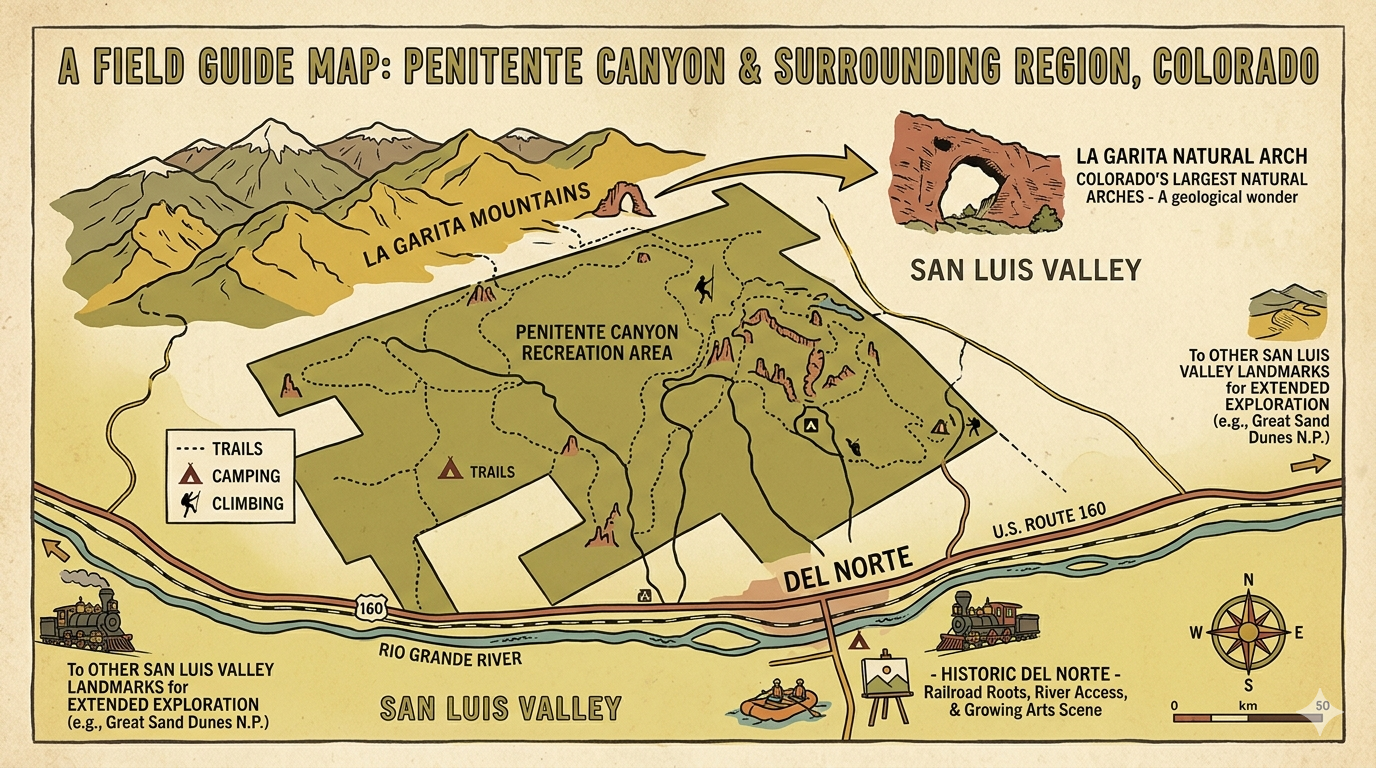 Nearby Attractions Worth Adding to Your Trip
Just beyond the canyon, the region offers complementary stops:
- La Garita Natural Arch, one of Colorado’s largest natural arches
- The historic town of Del Norte, known for its railroad roots, river access, and growing arts scene
- Easy access to other San Luis Valley landmarks for extended exploration
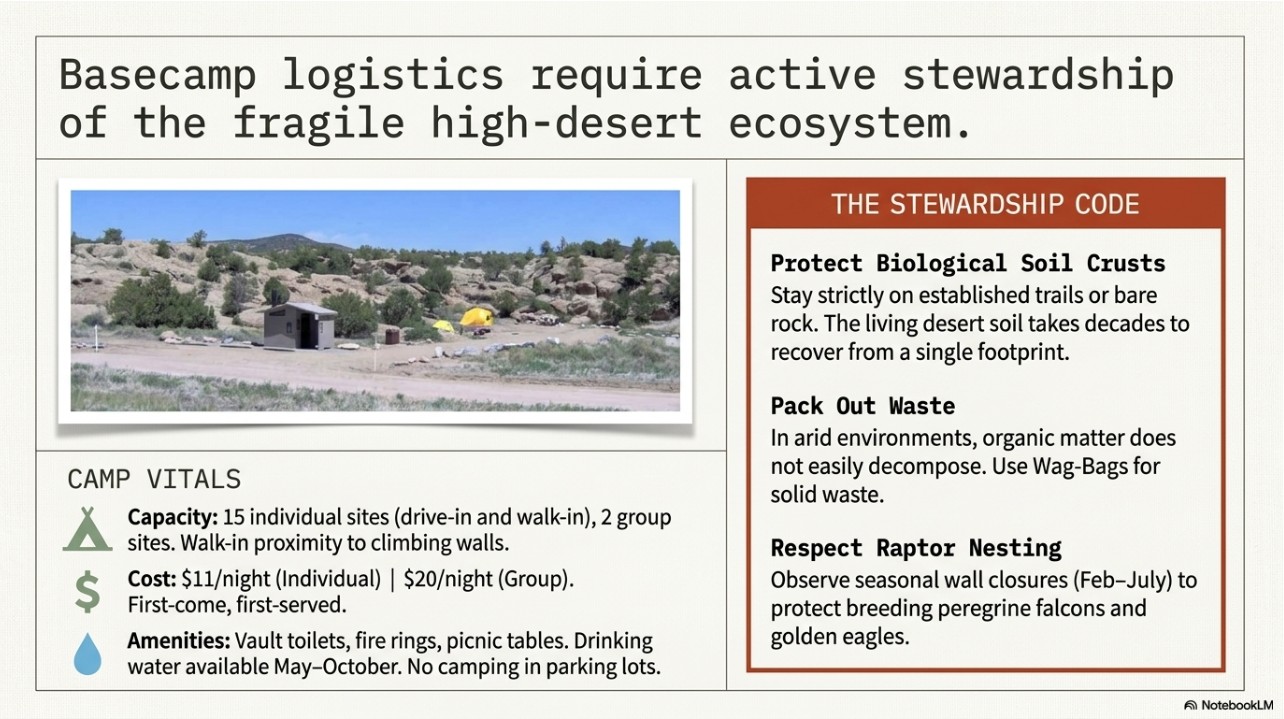 Why Penitente Canyon Matters
Penitente Canyon stands as a rare example of a place where geology, history, and modern recreation coexist. Its continued health depends on respectful use, local stewardship, and visitors who understand that access comes with responsibility.
For those willing to engage with it fully, Penitente Canyon offers something increasingly rare: an authentic connection to land that still feels wild, storied, and deeply rooted in place.
What Should I Ask a Real Estate Agent Before Hiring Them?