

The Most Important Commitment in Real Estate: Why You Need a Fiduciary in Your Corner
Buying or selling a home is likely the most significant financial transaction of your life. It is exciting, but it can also be complex and high-stakes. In a world overflowing with property apps and "DIY" real estate advice, many consumers ask a fundamental question: What is the real benefit of hiring a professional Realtor to represent me?
The answer isn't just about opening doors or putting a sign in the yard. The true value lies in a crucial legal and ethical concept: Fiduciary Duty.
What is Fiduciary Duty?
It sounds technical, but it is the bedrock of your protection as a consumer. In layman's terms, fiduciary duty is a high legal and ethical standard that requires a real estate agent to act solely in the best interests of their client rather than their own. Think of it as a promise of total loyalty and professionalism that you can rely on throughout a real estate transaction.
When you sign an agreement with a Realtor, you aren't just hiring a salesperson; you are hiring a dedicated advocate who is professionally bound to put you first.
The "Client First" Promise
The core principle of fiduciary duty is simple: your needs trump everything else. The primary goal of a real estate agent’s fiduciary duty is to ensure the consumer is served effectively.
According to the National Association of REALTORS® (NAR) Code of Ethics, members are legally required to cooperate in furthering their clients' best interests at all times. This is a massive benefit for buyers and sellers. It means that if an agent’s personal gain—such as the potential for a higher commission on a specific property—conflicts with what is best for you, they are ethically bound to choose your benefit over theirs.
Built on Trust and Accountability
A fiduciary relationship turns a standard business transaction into one built on trust. As a buyer or seller navigating a tricky market, you need to be able to rely on your agent as an ethical professional.
This isn't just a handshake agreement; it is backed by rigorous professional standards. REALTORS® undergo specific Code of Ethics training to ensure they understand these duties and how to apply them to protect consumers like you. Furthermore, the NAR Code of Ethics serves as a governing document that holds agents accountable to these high standards of conduct.
What Does This Look Like in Practice? (OLDCAR)
While the overarching requirement is to act in your "best interest," the real estate industry typically breaks down these practical duties into six categories, often remembered by the acronym OLDCAR. This is what having a fiduciary means on a day-to-day basis:
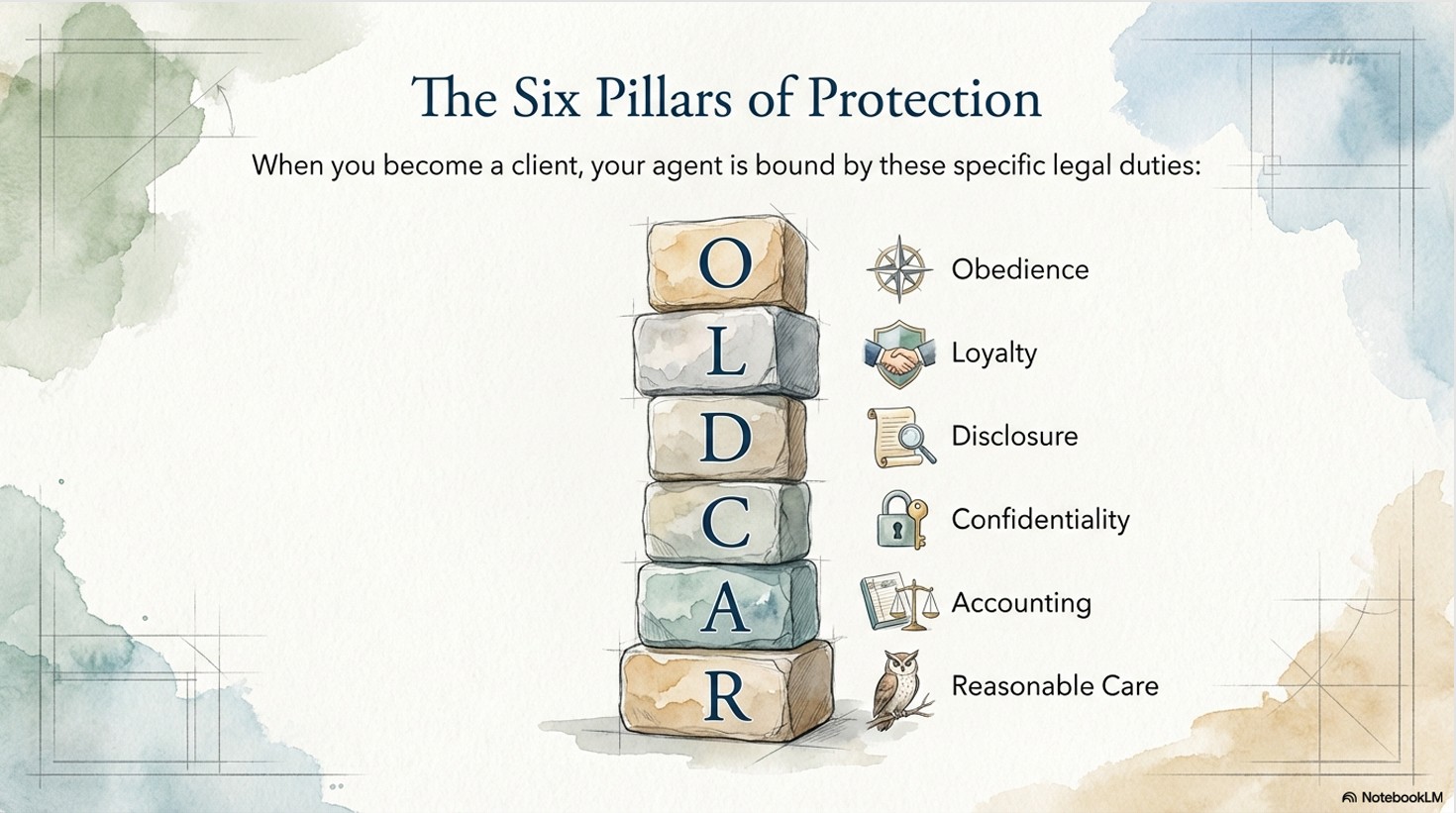
Obedience: Following your lawful instructions regarding the transaction.
-
Loyalty: Putting your interests above everyone else’s—including the agent's own interests.
-
Disclosure: Telling you every material fact they know about a property or a transaction that could affect your decision-making.
-
Confidentiality: Keeping your private information—such as your lowest acceptable price, your motivation for moving, or your financial status—a secret forever.
-
Accounting: Being fully responsible for all money and documents involved in the deal.
-
Reasonable Care: Using their professional skills, expertise, and knowledge to protect you from foreseeable harm.
The Bottom Line:
Don't navigate this major life event alone. Ensure you have a professional in your corner who is bound by duty to protect your interests above all others.